 In youth soccer, we spend a lot of time talking about development.
Technical training. Speed and strength. Position-specific work. Extra touches. Camps. Private sessions.
All of those things matter.
But as players climb higher on the soccer ladder, I’ve realized there is another part of development that can be much harder to see — and sometimes much harder to teach.
The mental side of the game.
What happens after a player makes a mistake? How do they respond when they aren’t starting? What happens when another talented player arrives who plays their position? Can they take criticism from a coach without losing confidence? Can they perform when they know they’re being evaluated?
And perhaps just as importantly for those of us raising young athletes: Are we helping them learn how to navigate those moments, or are we trying to navigate the moments for them?
I wanted to explore those questions with two people who have experienced the pressure of soccer at its highest levels: former U.S. Men’s National Team players and MLS Cup champions Greg Garza and Michael Parkhurst, co-founders of Beyond Goals Mentoring.
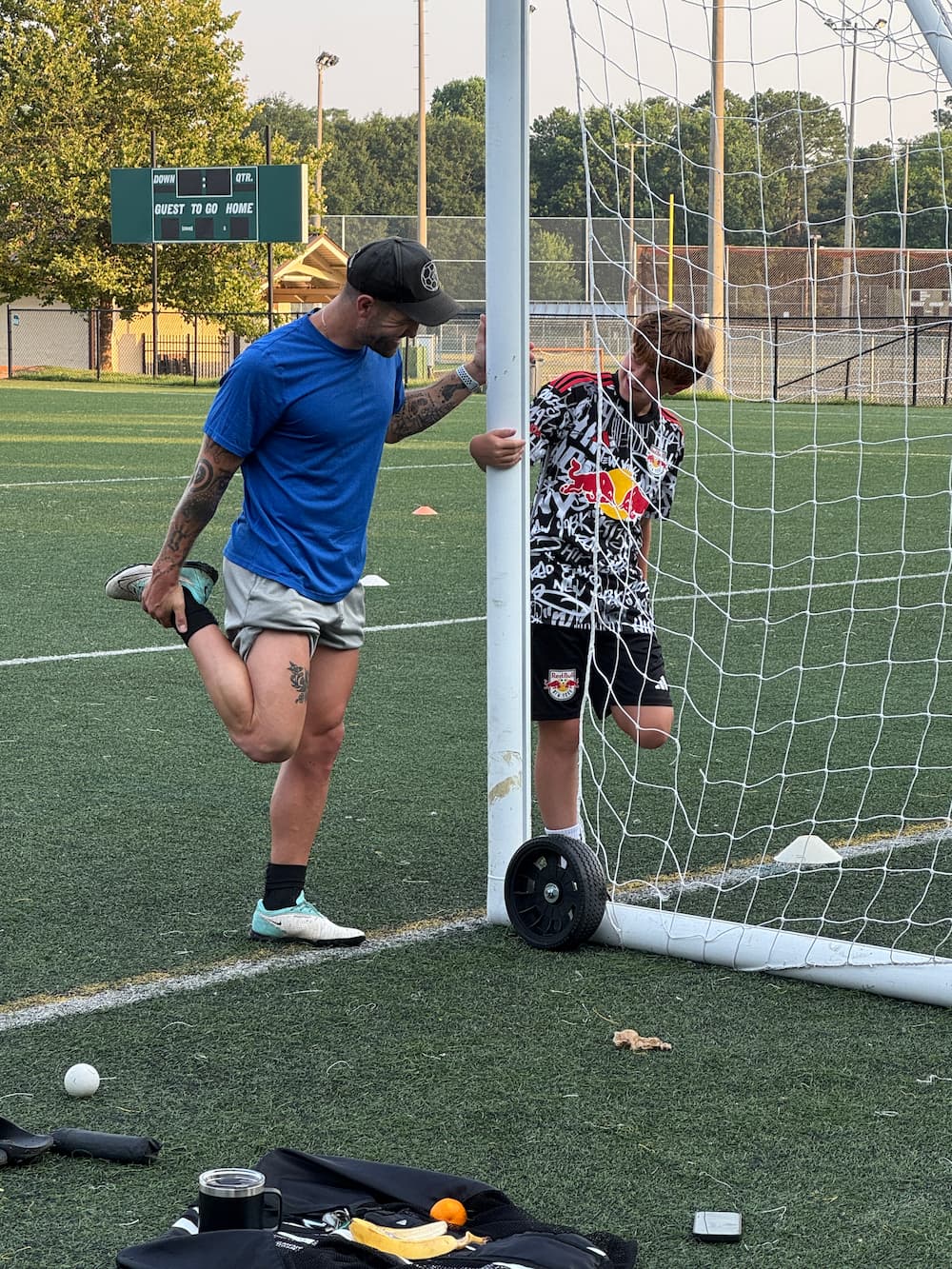
My son Liam works with Greg through Beyond Goals, so I’ve also had the opportunity to see this side of player development from a parent’s perspective.
And the more I’ve watched Liam progress through elite youth soccer, the more convinced I’ve become: Developing the player isn’t only about developing what they can do with the ball.
Talent Isn’t Always the Separator
At younger ages, it’s easy to notice the obvious things. Who’s fast? Who’s strong? Who has great technique? Who can strike a ball? Who scores the most goals?
But eventually, talented players are surrounded by other talented players.
Greg believes that’s when mentality can become one of the biggest separators.
“Mentality is so much more than what we often think it is.”
— Greg Garza
He points to confidence, leadership, resilience, game IQ, adaptability and a willingness to learn as qualities that all have roots in mentality.
His larger point is important: talent can take a player a long way, but mentality influences what happens when that talent is challenged.
Does the player adapt? Do they remain coachable? Do they recover from adversity? Do they continue improving when things aren’t going their way?
Beyond Goals was born from Greg and Michael seeing this during their own professional careers. They saw how much of a player’s progress depends not only on physical and technical ability, but also on mentality, decision-making and the ability to navigate the inevitable ups and downs of the game.
That is an important lesson for youth players. Because the higher you climb, the less likely you are to be the only talented player in the room.
 “Pressure Is Earned”

This may have been my favorite thing Greg told me:
“Pressure is EARNED. That’s the secret.”
— Greg Garza
That’s such a different way of teaching a young player to think about pressure.
Making an academy comes with pressure. Competing for a starting position comes with pressure. Playing important matches comes with pressure. Being evaluated comes with pressure.
But those situations exist because the player has earned the opportunity to be there.
Greg calls pressure a privilege.
“The more you accomplish, the more responsibility comes with it. The higher the level you reach, the greater the expectations become.”
Instead of trying to eliminate pressure, his message is to learn to use it: sharpen your focus, raise your standards and remind yourself that you belong in those moments.
That’s particularly relevant in elite youth soccer because evaluation doesn’t end once you make the team.
There’s always another training session. Another match. Another season. Another player developing beside you.
At the highest levels, competition isn’t necessarily evidence that something is going wrong. It’s part of the environment you’ve worked to reach.
Confidence Isn’t Pretending Everything Is Going Well
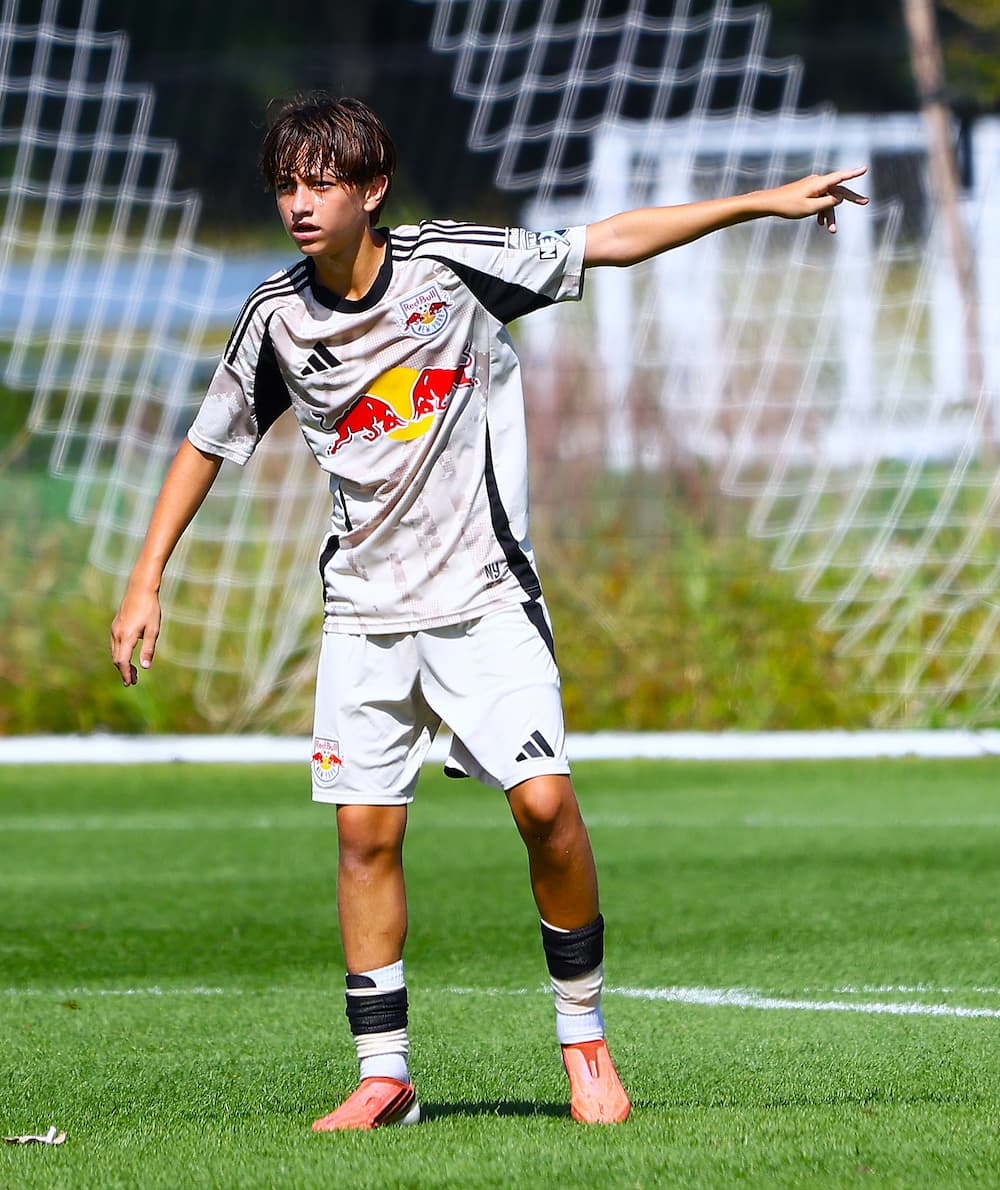
Confidence came up repeatedly in my conversation with Greg.
In fact, when I asked what he sees young players struggling with most through his work with Beyond Goals, his answer was simple:
“Confidence is always number one.”
— Greg Garza
But I liked what came next even more.
Greg brought the conversation back to controllables: preparation, discipline, attitude, effort and a willingness to learn.
Those are things a player can actually influence.
A player cannot control who starts. They can’t control whether another talented player joins the team. They can’t control every decision a coach makes. They can’t control a referee. They can’t even guarantee they’ll play well on a particular day.
But they can control how they prepare and how they respond.
“When we focus on what we can control, we develop the discipline necessary to grow.”
— Greg Garza
That’s a much more useful definition of confidence than simply telling a child, Believe in yourself. Give them things they can do.
Every Successful Player Has Bad Moments
Michael’s perspective adds another piece that I think young players desperately need to hear.
Bad games aren’t evidence that you don’t belong. Neither are mistakes, injuries or embarrassing moments.
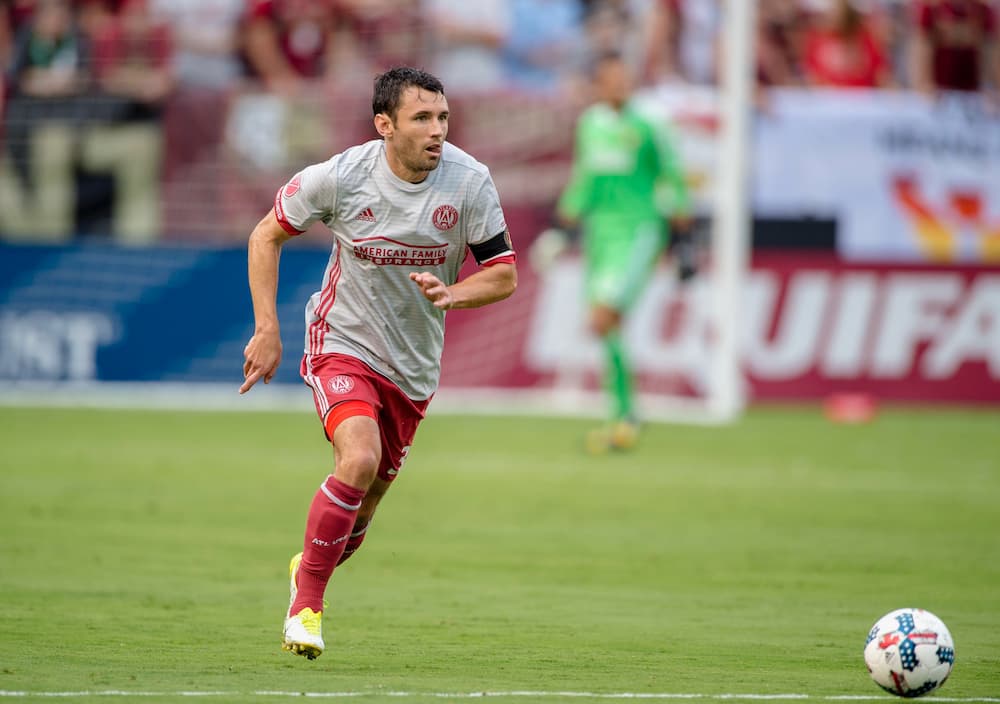
Michael played professionally for 15 years. And his message to young players is that every successful player experiences difficult moments — some more than others and some bigger than others.
“We get tested, we fail, we lose, we suffer, all so that we can enjoy the beautiful moments of achievement and success.”
— Michael Parkhurst
The difference is what happens afterward.
Michael encourages young players to first accept responsibility and then look for the learning opportunity.
Was my preparation good enough? Is my fitness where it needs to be? Am I getting enough sleep? Did I take care of the things within my control?
Then comes the more powerful question: What can I learn from this?
That’s resilience in a much more practical form. It isn’t pretending the bad game didn’t hurt. It’s learning how to use it.
Parents: The Ride Home Matters
This part hit home for me.
I asked Michael what parents commonly do after a difficult game that they believe is helping — but may actually make things harder.
He described three common reactions.
A parent becomes quiet because they’re frustrated with how their child played.
A parent immediately begins analyzing the game and trying to fix everything.
Or a parent starts finding someone else to blame: the coach, the referee, the position their child was asked to play or the circumstances surrounding the game.
I think most soccer parents can probably recognize ourselves somewhere in that list.
And usually, it comes from a good place. We want to help.
But Michael’s point is that immediately dissecting the performance may be the last thing the player wants or needs at that moment.
Even blaming someone else can inadvertently teach the player to look outward rather than learning to take responsibility for the things they can control.
So what should we do?
Michael’s suggestion is almost ridiculously simple: Let them come to us.
Maybe the ride home isn’t the time for a performance review. Ask what they want for lunch. Offer them a snack. Talk about something else.
If they start talking about the game, listen. If they don’t, perhaps the conversation happens later that evening. Maybe it happens tomorrow.
That doesn’t mean parents shouldn’t help their children work through difficult performances. It means we don’t always have to do it immediately.
As a soccer parent myself, I think that’s an important distinction.
Sometimes supporting development means knowing when to talk. And sometimes it means knowing when not to.
Why the Mental Side Can’t Be an Afterthought
Michael and Greg created Beyond Goals because they saw a gap.
Michael told me that if you ask athletes how much of sports is mental, almost everyone assigns a meaningful percentage to it. Yet youth development often pours the overwhelming majority of its resources into physical and technical training.
That’s the disconnect.
Through Beyond Goals Mentoring, Greg and Michael work with young players on the mental and tactical sides of development, helping them build tools to navigate the challenges that come with the player journey.
“A lot of success comes from navigating those periods and coming out stronger.”
— Michael Parkhurst
And their goal extends beyond creating better soccer players.
They want young athletes to develop tools for dealing with adversity that will serve them as young men and women too.
That may ultimately be one of the most valuable things sports can teach.
The Higher You Climb, the More This Matters
One thing I’ve learned watching the youth soccer pathway is that reaching the next level doesn’t make things easier.
Often, it does the opposite.
The players get better. Competition gets stronger. Expectations increase. Mistakes become more noticeable. Playing time becomes more valuable.
And there is no point where a young player receives a certificate saying: Congratulations. You made it. You no longer have to prove yourself.
That’s why I think we need to broaden the way we talk about player development.
Extra touches matter. Technical development matters. Speed, strength and tactical understanding matter.
But so do confidence, resilience, accountability, adaptability and the ability to perform under pressure.
And as parents, our role isn’t necessarily to remove every difficult moment from the pathway.
Sometimes the difficult moment is part of the development.
“Don’t fear the pressure.”
— Greg Garza
The goal isn’t to raise a player who never experiences disappointment, pressure or failure. It’s to help develop a player who knows what to do when they inevitably arrive.
About Beyond Goals Mentoring
Beyond Goals Mentoring was founded by former professional players and U.S. Men’s National Team members Greg Garza and Michael Parkhurst. The organization works with youth players on the mental and tactical sides of development, including confidence, resilience, decision-making and soccer IQ.
Website: https://beyondgoalsmentoring.com
In youth soccer, we spend a lot of time talking about development.
Technical training. Speed and strength. Position-specific work. Extra touches. Camps. Private sessions.
All of those things matter.
But as players climb higher on the soccer ladder, I’ve realized there is another part of development that can be much harder to see — and sometimes much harder to teach.
The mental side of the game.
What happens after a player makes a mistake? How do they respond when they aren’t starting? What happens when another talented player arrives who plays their position? Can they take criticism from a coach without losing confidence? Can they perform when they know they’re being evaluated?
And perhaps just as importantly for those of us raising young athletes: Are we helping them learn how to navigate those moments, or are we trying to navigate the moments for them?
I wanted to explore those questions with two people who have experienced the pressure of soccer at its highest levels: former U.S. Men’s National Team players and MLS Cup champions Greg Garza and Michael Parkhurst, co-founders of Beyond Goals Mentoring.
My son Liam works with Greg through Beyond Goals, so I’ve also had the opportunity to see this side of player development from a parent’s perspective.
And the more I’ve watched Liam progress through elite youth soccer, the more convinced I’ve become: Developing the player isn’t only about developing what they can do with the ball.
Talent Isn’t Always the Separator
At younger ages, it’s easy to notice the obvious things. Who’s fast? Who’s strong? Who has great technique? Who can strike a ball? Who scores the most goals?
But eventually, talented players are surrounded by other talented players.
Greg believes that’s when mentality can become one of the biggest separators.
“Mentality is so much more than what we often think it is.”
— Greg Garza
He points to confidence, leadership, resilience, game IQ, adaptability and a willingness to learn as qualities that all have roots in mentality.
His larger point is important: talent can take a player a long way, but mentality influences what happens when that talent is challenged.
Does the player adapt? Do they remain coachable? Do they recover from adversity? Do they continue improving when things aren’t going their way?
Beyond Goals was born from Greg and Michael seeing this during their own professional careers. They saw how much of a player’s progress depends not only on physical and technical ability, but also on mentality, decision-making and the ability to navigate the inevitable ups and downs of the game.
That is an important lesson for youth players. Because the higher you climb, the less likely you are to be the only talented player in the room.
“Pressure Is Earned”
This may have been my favorite thing Greg told me:
“Pressure is EARNED. That’s the secret.”
— Greg Garza
That’s such a different way of teaching a young player to think about pressure.
Making an academy comes with pressure. Competing for a starting position comes with pressure. Playing important matches comes with pressure. Being evaluated comes with pressure.
But those situations exist because the player has earned the opportunity to be there.
Greg calls pressure a privilege.
“The more you accomplish, the more responsibility comes with it. The higher the level you reach, the greater the expectations become.”
Instead of trying to eliminate pressure, his message is to learn to use it: sharpen your focus, raise your standards and remind yourself that you belong in those moments.
That’s particularly relevant in elite youth soccer because evaluation doesn’t end once you make the team.
There’s always another training session. Another match. Another season. Another player developing beside you.
At the highest levels, competition isn’t necessarily evidence that something is going wrong. It’s part of the environment you’ve worked to reach.
Confidence Isn’t Pretending Everything Is Going Well
Confidence came up repeatedly in my conversation with Greg.
In fact, when I asked what he sees young players struggling with most through his work with Beyond Goals, his answer was simple:
“Confidence is always number one.”
— Greg Garza
But I liked what came next even more.
Greg brought the conversation back to controllables: preparation, discipline, attitude, effort and a willingness to learn.
Those are things a player can actually influence.
A player cannot control who starts. They can’t control whether another talented player joins the team. They can’t control every decision a coach makes. They can’t control a referee. They can’t even guarantee they’ll play well on a particular day.
But they can control how they prepare and how they respond.
“When we focus on what we can control, we develop the discipline necessary to grow.”
— Greg Garza
That’s a much more useful definition of confidence than simply telling a child, Believe in yourself. Give them things they can do.
Every Successful Player Has Bad Moments
Michael’s perspective adds another piece that I think young players desperately need to hear.
Bad games aren’t evidence that you don’t belong. Neither are mistakes, injuries or embarrassing moments.
Michael played professionally for 15 years. And his message to young players is that every successful player experiences difficult moments — some more than others and some bigger than others.
“We get tested, we fail, we lose, we suffer, all so that we can enjoy the beautiful moments of achievement and success.”
— Michael Parkhurst
The difference is what happens afterward.
Michael encourages young players to first accept responsibility and then look for the learning opportunity.
Was my preparation good enough? Is my fitness where it needs to be? Am I getting enough sleep? Did I take care of the things within my control?
Then comes the more powerful question: What can I learn from this?
That’s resilience in a much more practical form. It isn’t pretending the bad game didn’t hurt. It’s learning how to use it.
Parents: The Ride Home Matters
This part hit home for me.
I asked Michael what parents commonly do after a difficult game that they believe is helping — but may actually make things harder.
He described three common reactions.
A parent becomes quiet because they’re frustrated with how their child played.
A parent immediately begins analyzing the game and trying to fix everything.
Or a parent starts finding someone else to blame: the coach, the referee, the position their child was asked to play or the circumstances surrounding the game.
I think most soccer parents can probably recognize ourselves somewhere in that list.
And usually, it comes from a good place. We want to help.
But Michael’s point is that immediately dissecting the performance may be the last thing the player wants or needs at that moment.
Even blaming someone else can inadvertently teach the player to look outward rather than learning to take responsibility for the things they can control.
So what should we do?
Michael’s suggestion is almost ridiculously simple: Let them come to us.
Maybe the ride home isn’t the time for a performance review. Ask what they want for lunch. Offer them a snack. Talk about something else.
If they start talking about the game, listen. If they don’t, perhaps the conversation happens later that evening. Maybe it happens tomorrow.
That doesn’t mean parents shouldn’t help their children work through difficult performances. It means we don’t always have to do it immediately.
As a soccer parent myself, I think that’s an important distinction.
Sometimes supporting development means knowing when to talk. And sometimes it means knowing when not to.
Why the Mental Side Can’t Be an Afterthought
Michael and Greg created Beyond Goals because they saw a gap.
Michael told me that if you ask athletes how much of sports is mental, almost everyone assigns a meaningful percentage to it. Yet youth development often pours the overwhelming majority of its resources into physical and technical training.
That’s the disconnect.
Through Beyond Goals Mentoring, Greg and Michael work with young players on the mental and tactical sides of development, helping them build tools to navigate the challenges that come with the player journey.
“A lot of success comes from navigating those periods and coming out stronger.”
— Michael Parkhurst
And their goal extends beyond creating better soccer players.
They want young athletes to develop tools for dealing with adversity that will serve them as young men and women too.
That may ultimately be one of the most valuable things sports can teach.
The Higher You Climb, the More This Matters
One thing I’ve learned watching the youth soccer pathway is that reaching the next level doesn’t make things easier.
Often, it does the opposite.
The players get better. Competition gets stronger. Expectations increase. Mistakes become more noticeable. Playing time becomes more valuable.
And there is no point where a young player receives a certificate saying: Congratulations. You made it. You no longer have to prove yourself.
That’s why I think we need to broaden the way we talk about player development.
Extra touches matter. Technical development matters. Speed, strength and tactical understanding matter.
But so do confidence, resilience, accountability, adaptability and the ability to perform under pressure.
And as parents, our role isn’t necessarily to remove every difficult moment from the pathway.
Sometimes the difficult moment is part of the development.
“Don’t fear the pressure.”
— Greg Garza
The goal isn’t to raise a player who never experiences disappointment, pressure or failure. It’s to help develop a player who knows what to do when they inevitably arrive.
About Beyond Goals Mentoring
Beyond Goals Mentoring was founded by former professional players and U.S. Men’s National Team members Greg Garza and Michael Parkhurst. The organization works with youth players on the mental and tactical sides of development, including confidence, resilience, decision-making and soccer IQ.
Website: https://beyondgoalsmentoring.com